
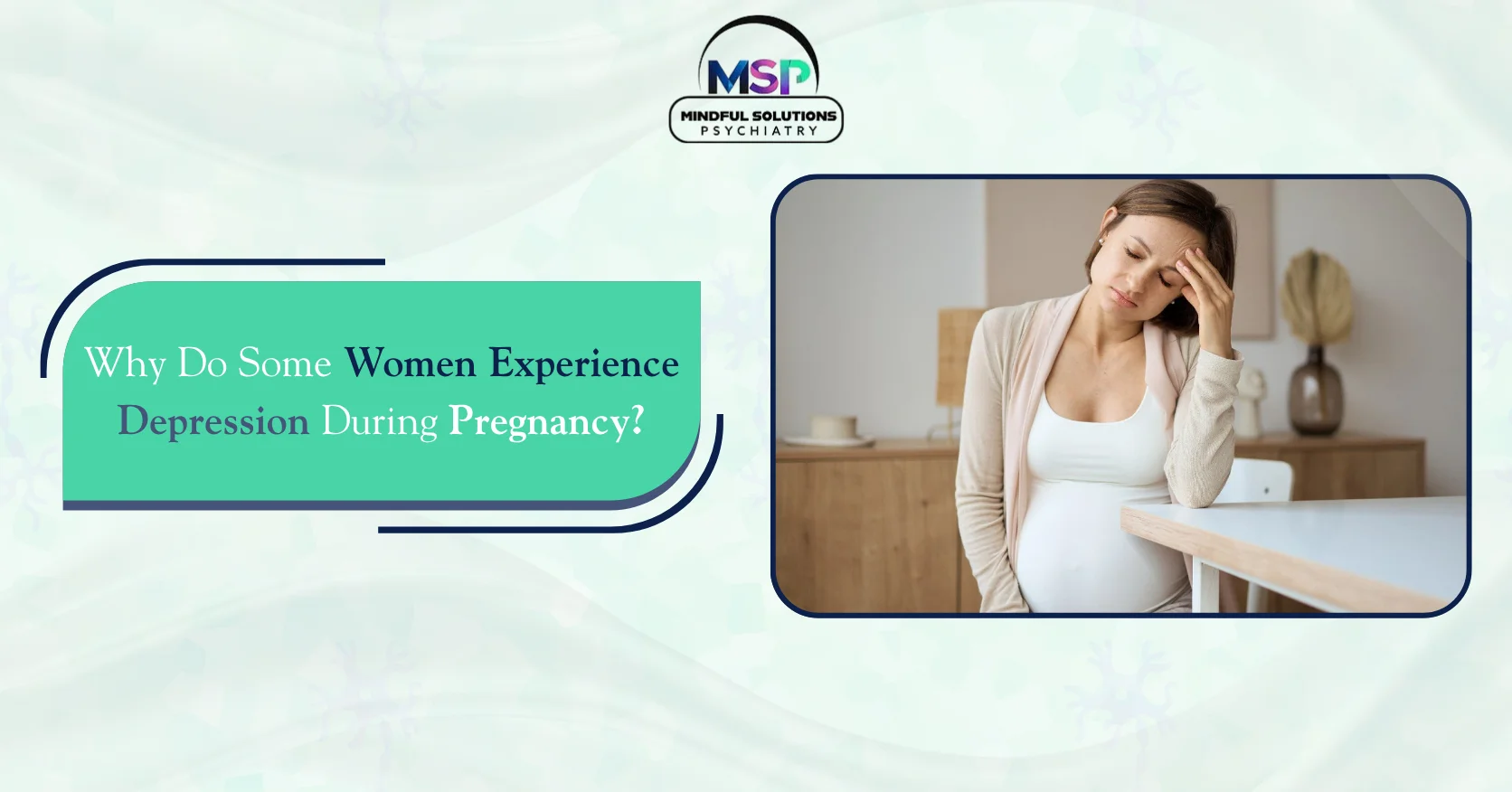
Pregnancy can be a sweet experience.
It can be heavy as well.
For some women, the sadness does not come and go. It stays. It grows. It makes things that look easy difficult. This is depression in pregnancy, and it is a reality.
Sometimes.
A woman might appear kind on the outside, but she can feel hurt inside. She can still go to appointments and reply to texts. But inside, she feels tired, empty, scared, or lonely.
No, this isn’t a weakness. It’s a health concern.
What It Can Feel Like
Depression in pregnancy can vary significantly from one individual to another. Some women feel very sad. Some feel numb. Some feel anxious all the time. Some people become disinterested in activities they previously found enjoyable.
A few common signs are:
- Feeling sad most days
- Crying often (which often makes women wonder: Is it bad to cry while pregnant?)
- Feeling tired all the time
- Sleeping too much or too little
- Eating much more or much less
- Trouble focusing
- Feeling guilty, hopeless, or flat
- Not enjoying normal life anymore
Some of these signs can look like normal pregnancy changes. That is part of what makes this so hard. A woman may think, “Maybe this is just pregnancy.” But when the sadness does not lift, it may be something more.
Why It Happens
There is no single reason.
For many women, depression during pregnancy is caused by a mix of things. Recognizing the early signs of stress in pregnancy is important, as stress can build up quickly. Sleep can get worse. Worry can rise. A history of depression can return, and navigating the intersection of manic depression and pregnancy can feel uniquely challenging. Family problems, money problems, health problems, or little support can all make things harder.
Hormone changes may also play a part. Concerns may arise regarding the baby, the birthing process, or the transition into parenthood. Some women also carry old pain with them (from past abuse, loss, or trauma) and pregnancy can stir that pain back up.
It can happen after an unplanned pregnancy. That does not mean the baby is not wanted. It just means the feelings are complicated. Very complicated.
Why It Is Easy to Hide
Many women feel pressure to be grateful every minute of pregnancy. They may hear, “You should be happy.” They may hear, “This is a beautiful time.” And yes, pregnancy can be beautiful. But it can also be hard.
Both things can be true.
A woman may not tell anyone how bad she feels. She may not want to worry her family. She may think she should handle it alone. She may feel shame. She may think others will judge her.
So she stays quiet.
And that silence can make the pain grow.
Signs That Need Attention
Some warning signs should not be brushed aside. These include:
- Feeling sad for two weeks or more
- Losing interest in almost everything
- Feeling very anxious all the time
- Feeling hopeless
- Feeling numb or disconnected
- Pulling away from family and friends
- Having a hard time getting through the day
- Thinking about harming yourself or experiencing suicidal thoughts when pregnant
If these feelings show up, help is needed. Not later. Not someday. Now.
Why Getting Help Matters
Untreated depression can make pregnancy harder. It can affect sleep. It can affect eating. It can make it harder to care for yourself. It may also make it harder to keep up with prenatal care.
When women feel severe emotional distress, they often worry. They may wonder, “Can depression cause miscarriage?” Emotional turmoil and miscarriage are interconnected in intricate ways. Addressing this issue is vital, as unaddressed depression can negatively impact both mother and child.
And after the baby is born, depression can still be there. Or it can get worse.
That is why support matters early. The sooner a woman gets help, the better her chances of feeling well again.
Treatment can include talk therapy, medicine, or both. The right plan depends on the person. No one path fits everyone.
What Support Can Look Like
Support does not need to be big to be helpful.
Sometimes, it starts with one honest talk. Sometimes, it starts with one appointment. Sometimes, it starts with a single question: “Are you really okay?”
Support can include:
- A kind mental health evaluation
- A treatment plan that fits the person, focusing on how to reduce anxiety during pregnancy
- Medicine management when needed
- Talk therapy and emotional support
- Follow-up care to see how things are going
- Help by telehealth or in person
Small steps matter. A lot.
How Mindful Solutions Psychiatry Can Help
Mindful Solutions Psychiatry helps with mental health issues like depression and anxiety. We see patients 10 and up, and offer in-person or telehealth visits. This support can make a big difference, especially for pregnant women feeling overwhelmed. Having someone to listen and a plan in place can help.
A Gentle Reminder
Some women experience depression during pregnancy because pregnancy is not just a physical change. It is a life change. It can shake the mind, the heart and the nerves all at once.
That is why care matters. That is why talking matters. That is why support matters.
No woman should feel embarrassed for needing help. No woman should feel like she has to push through in silence.
She deserves care. She deserves rest. She deserves support that feels kind, safe and real.
And she does not have to do it alone.
FAQs
Q. How Can Mindful Solutions Psychiatry Help Me?
We listen. Our friendly team meets with you online through safe video visits, so you do not have to leave your house. We learn your personal story, check your health, and build a safe plan to help you feel bright again.
Q. Can I Take Medicine for Depression While Pregnant?
Yes. Some medicines are safe for you and your growing baby (and your doctor can help you find them). Talk to your doctor before changing your pills. Sudden changes can make you feel worse.