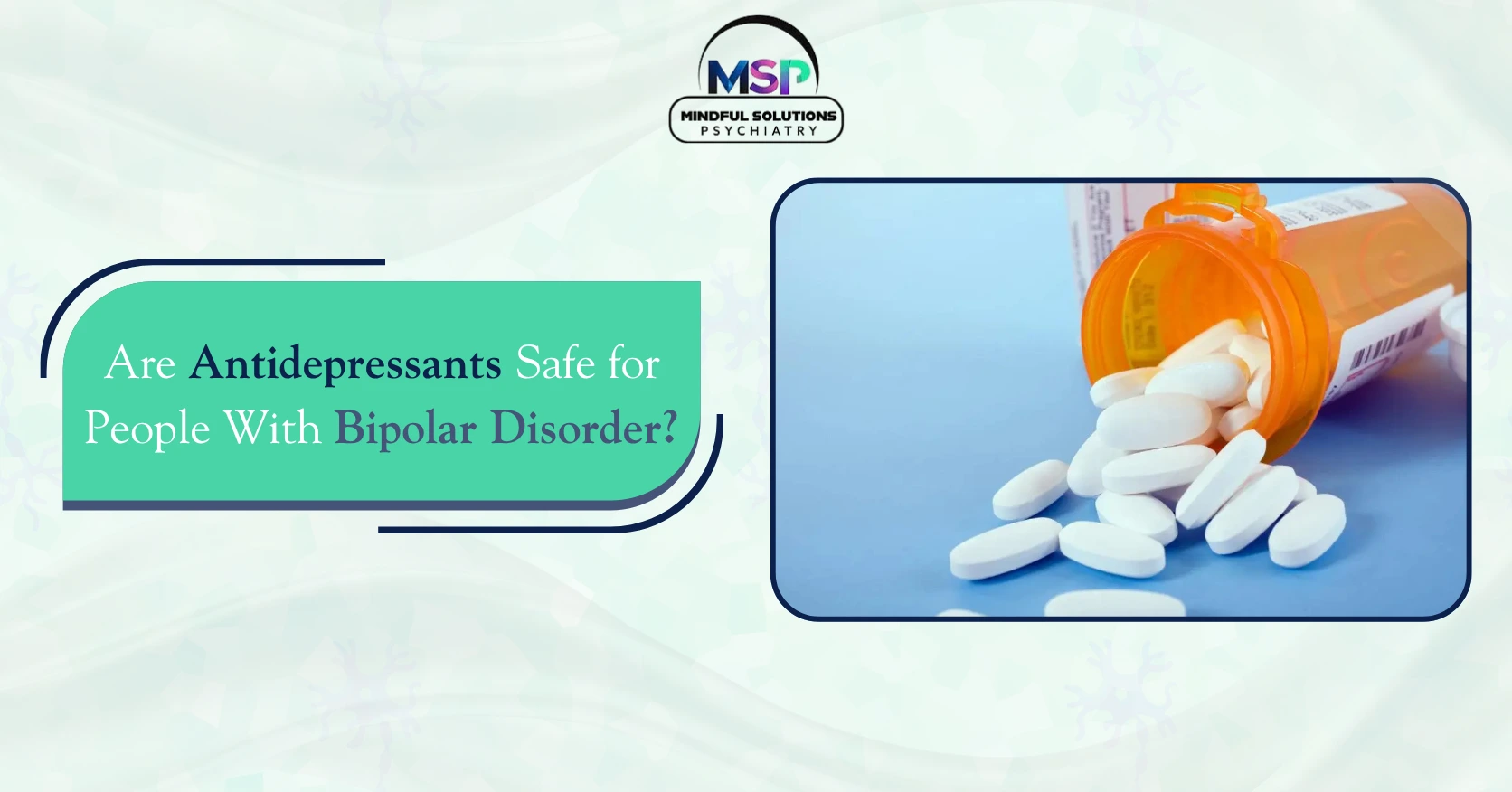
Coping with bipolar disorder can be tough. One day, a person may feel very depressed. The next day, they might feel energized. Such temper changes can interfere with sleeping, working, learning, or living normally.
Depression is something that many people with bipolar disorder experience, too. For this reason, they may feel concerned about the safety of antidepressants.
Individuals with unmanaged bipolar disorder experience increased mood fluctuations. Antidepressants and professional support can aid in better management.
What Is Bipolar Disorder?
Bipolar disorder is a mental health issue that leads to significant fluctuations in mood, energy, and behavior.
A person may have times of:
- Deep sadness
- Low energy
- Hopeless feelings
- Trouble sleeping
- Trouble focusing
They may also have times of:
- Very high energy
- Less need for sleep
- Fast talking
- Racing thoughts
- Risky choices
- Feeling much more confident than usual
Moods can impact daily life and make it hard to choose the right treatment.
What Are Antidepressants?
Antidepressants are given to help manage depression. They can assist with personal sadness, decrease personal stress and worry and enhance personal capability.
They can help with:
- Low mood
- Anxiety
- Low energy
- Poor sleep
- Loss of interest
However, for bipolar disorder, antidepressants may not be easy. These can help to lift low moods, however, some individuals may become more manic with their use.
Can Antidepressants Be Unsafe?
Yes, they can be unsafe for some people with bipolar disorder, especially if they are used alone.
A person may start to feel:
- Too wired
- Too restless
- Less need for sleep
- Very talkative
- Very fast thoughts
- More impulsive
This can look like mania or hypomania. It may also make mood swings stronger.
That is why a doctor should always check the full mental health history before giving an antidepressant.
Why Diagnosis Matters So Much
Some people with bipolar disorder are first told they have depression only. This can happen because the low mood is often easier to see than the high mood.
But if bipolar disorder is missed, antidepressants alone may not be the right choice.
A good mental health provider may ask about:
- Past mood changes
- Sleep changes
- Family history
- Energy levels
- Risky actions
- Times of extreme happiness
These questions help build a safer treatment plan.
Why Mood Stabilizers Are Often Used
Many people with bipolar disorder need a mood stabilizer. This kind of medicine helps keep the mood more even.
Sometimes a provider may use:
- A mood stabilizer
- An antipsychotic medicine
- Therapy
- A mix of treatments
If an antidepressant is used, it is often given with close care and sometimes with another medicine to help protect against mania.
Every person is different. The best plan depends on the person, their symptoms and how they respond to treatment.
Signs the Medicine Plan May Need a Change
It is important to watch for warning signs after starting or changing medicine.
Call a mental health provider if there is:
- Less sleep than normal
- More energy than normal
- Fast speech
- Racing thoughts
- Restless behavior
- Irritability
- Risky choices
- Big mood swings
These signs may mean the treatment plan needs to be checked right away.
Are Antidepressants Ever Used in Bipolar Disorder?
Yes. In some cases, antidepressants may be used with care.
A provider may think about:
- The type of bipolar disorder
- Past medicine use
- How strong the depression is
- Sleep habits
- Anxiety symptoms
- Family history
- Other health needs
This is why follow-up visits matter. A person should not take an antidepressant and then be left alone with no check-ins. Mood changes can happen slowly or quickly, so care must stay active.
Therapy Can Help Too
Medicine is not the only help for bipolar disorder. Therapy can teach tools for daily life.
Therapy may help a person:
- Spot mood changes early
- Handle stress
- Build healthy habits
- Improve sleep
- Deal with tough thoughts
- Feel more in control
Many people do better with both therapy and medicine together.
Healthy Habits Also Matter
Small daily habits can support mental health care.
Helpful steps include:
- Going to bed at the same time
- Waking up at the same time
- Eating regular meals
- Moving the body each day
- Taking medicine as told
- Not skipping follow-up visits
- Avoiding drugs and too much alcohol
These steps do not replace treatment. But they can help support it.
When to Get Help
It is important to get help fast if mood symptoms start to affect daily life.
Watch for:
- Very deep sadness
- Big energy changes
- Trouble sleeping
- Strange or risky behavior
- Feeling out of control
- Thoughts of self-harm
Getting help early can make a big difference.
How Mindful Solutions Psychiatry Can Help
Mindful Solutions Psychiatry offers mental health care that is personal and caring. The team helps patients understand their symptoms and creates a fitting plan.
Their care may include:
- Psychiatric evaluations
- Medication management
- Mood disorder care
- Depression care
- Ongoing follow-up
- Support in a caring setting
This kind of help matters because bipolar disorder is not something a person should face alone.
Final Thoughts
Antidepressants can help some people with bipolar disorder. However, they can be risky on their own and may worsen mood swings. A correct diagnosis and care plan are crucial. With the right treatment, people with bipolar disorder can live stable lives. Mindful Solutions Psychiatry offers patients the support they need. Our support is attentive, calm, and individualized.
FAQs
Q. Can antidepressants make bipolar disorder worse?
Yes, they can in some people. They may cause the mood to go too high.
Q. Why are antidepressants risky for bipolar disorder?
They can lead to mania or stronger mood swings.