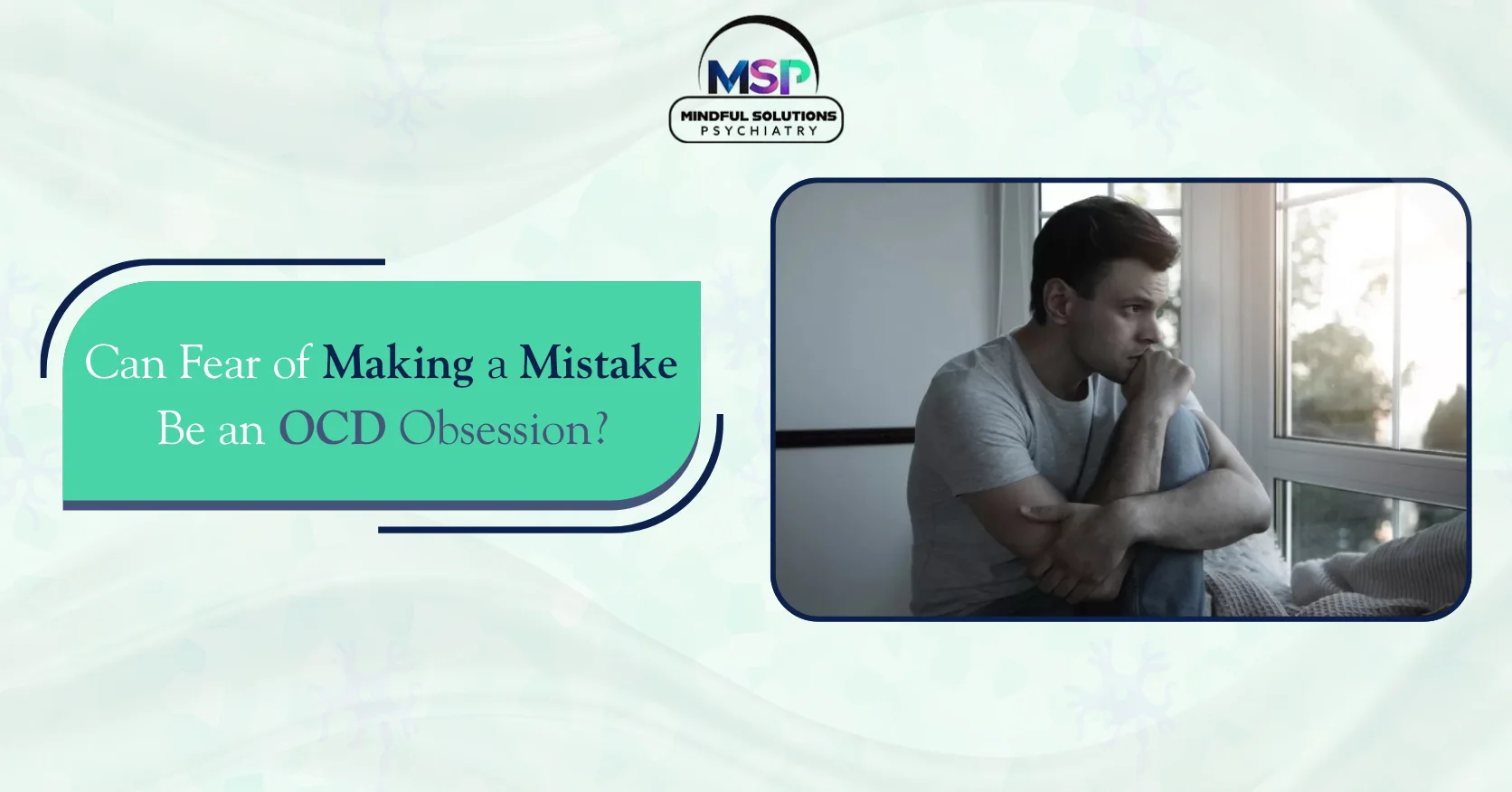
Before a test, that knot in your stomach shows how much we fear failure. You may also struggle to sleep, worried about saying the wrong thing. While feeling nervous is normal, for some, this worry morphs into a monster. Worrying about mistakes amplifies their inner voice, making daily tasks difficult. When you’re overwhelmed with the prospect of making things up, you may have a significant mental health problem. Let’s examine the transformation of a normal fear into an obsession.
What Is Obsessive Compulsive Disorder?
Understanding obsessive-compulsive disorder (OCD) is crucial. Then we can discuss the anxiety of making mistakes. This condition is like a trap, consisting of the obsession with intrusive and frightening concerns that ‘seize’ your mind. You don’t want these dark thoughts, but they will not go away. The second is the compulsion. Compulsions are the actions that you feel compelled to perform (such as counting, checking, and repeating words) to try to get rid of the scary thoughts when they arise. You do it assuming it’s going to keep you safe. But the relief is only temporary and, soon, the anxiety returns and you have to do the routine again.
Why Your Brain Plays Tricks on You
Think of your brain like a helpful smoke detector. A normal detector beeps only when there is a fire. But when a detector breaks, it might scream just because you burned toast. A brain dealing with intense fear works the same way, sending out a massive warning signal for a tiny problem. Your brain tells you that making a small mistake will cause a terrible disaster. The internal alarm feels so deafening you feel forced to fix the problem immediately.
How the Fear of Mistakes Turns into an Obsession
When a person has this condition, their broken alarm system gets stuck on one worry. Being terrified of making a mistake is a common fear. People battling this worry believe that one tiny error will ruin their life. They panic that spelling a single word wrong will instantly get them fired. A student might worry that missing one question means they are a failure. The brain aggressively whispers that they must be utterly flawless. Perfection isn’t a goal. It feels like oxygen.
Clear Signs to Watch Out For
It can be hard telling the difference between wanting to do a good job and having a mental health issue. If you want to know if your fear is actually an obsession, look closely at your day. Here are strong signs that your worry has grown too big:
- Your worry about doing things perfectly takes up hours every day.
- You feel sick, sweaty, or dizzy when something isn’t perfect.
- The fear entirely stops you from finishing schoolwork or getting your job done.
- You cannot relax your body until a project feels flawlessly correct.
- You avoid trying fun new hobbies because you are scared to fail.
Common Actions People Take to Feel Safe
When the loud alarm goes off in your brain, you will do anything to make it stop. This strong need to feel safe directly leads to compulsions. If you are obsessed with not making mistakes, you might find yourself doing these actions:
- Checking things repeatedly. You might read a text message twenty times before sending it.
- Asking for constant comfort. You might ask your friends all day if you made the right choice.
- Erasing and fixing tasks. You might rewrite your name until the letters look exactly right.
- Thinking endlessly about the past. You might replay a conversation to make sure you sounded okay.
Wanting to Do Well Versus Needing to Be Perfect
Many people try hard to do their best. A person who wants to do well feels proud when they finish a project. If they make a small mistake, they take a deep breath, shrug it off, and move on. However, someone dealing with an intense obsession does not feel happy when they finish a task. They only feel a brief moment of relief. They aren’t aiming for perfection to win a prize; rather, they are frantically trying to be flawless just to quiet the painful anxiety sitting in their chest.
Finding Help at Mindful Solutions Psychiatry
If these struggles sound familiar, you do not have to fight this worry alone. Getting professional help can change your life. At Mindful Solutions Psychiatry, we offer gentle mental health support specifically for people ages ten and up. Our medical team will patiently listen to your story without judging you. We offer custom treatment plans to help you find your balance. This care often includes finding the right medicine to quiet those loud alarms in your brain. We also teach practical skills to effectively manage daily worries. We offer comfortable office visits and secure video appointments.
A Journey toward a Calmer Mind
Worrying about mistakes can be a big issue. This fear steals your happiness and disrupts your peace. These frightening thoughts are not necessarily as indicative of weakness as they seem. It simply means that your complex brain is not getting the extra support it needs to feel safe once more. You have a right to a life that is full, and a mistake should not be as threatening as a sentence. If you or a loved one is struggling, contact Mindful Solutions Psychiatry today. We offer both comfortable office visits and secure video appointments for patients ages 10 and up in Texas, Washington, and New Mexico. Let’s work together to help you find your balance.
FAQs
Q. How do people try to stop the scary thoughts?
They do things called compulsions. This means doing an action over and over. They might check things a lot to feel safe.
Q. Why does the brain worry so much?
The brain acts like a broken smoke alarm. It screams for a tiny problem. Small mistakes feel like huge disasters.