The human brain is amazing. It is used to think, to feel, to talk and to understand the world. We all have our sad days and happy days. This is the natural order of things.
But some people have a health condition called bipolar disorder. Bipolar disorder can cause big changes in mood, energy and behavior. Someone can be buzzing with energy and excited about something and, at another time, neither. Sometimes they can be very sad and tired.
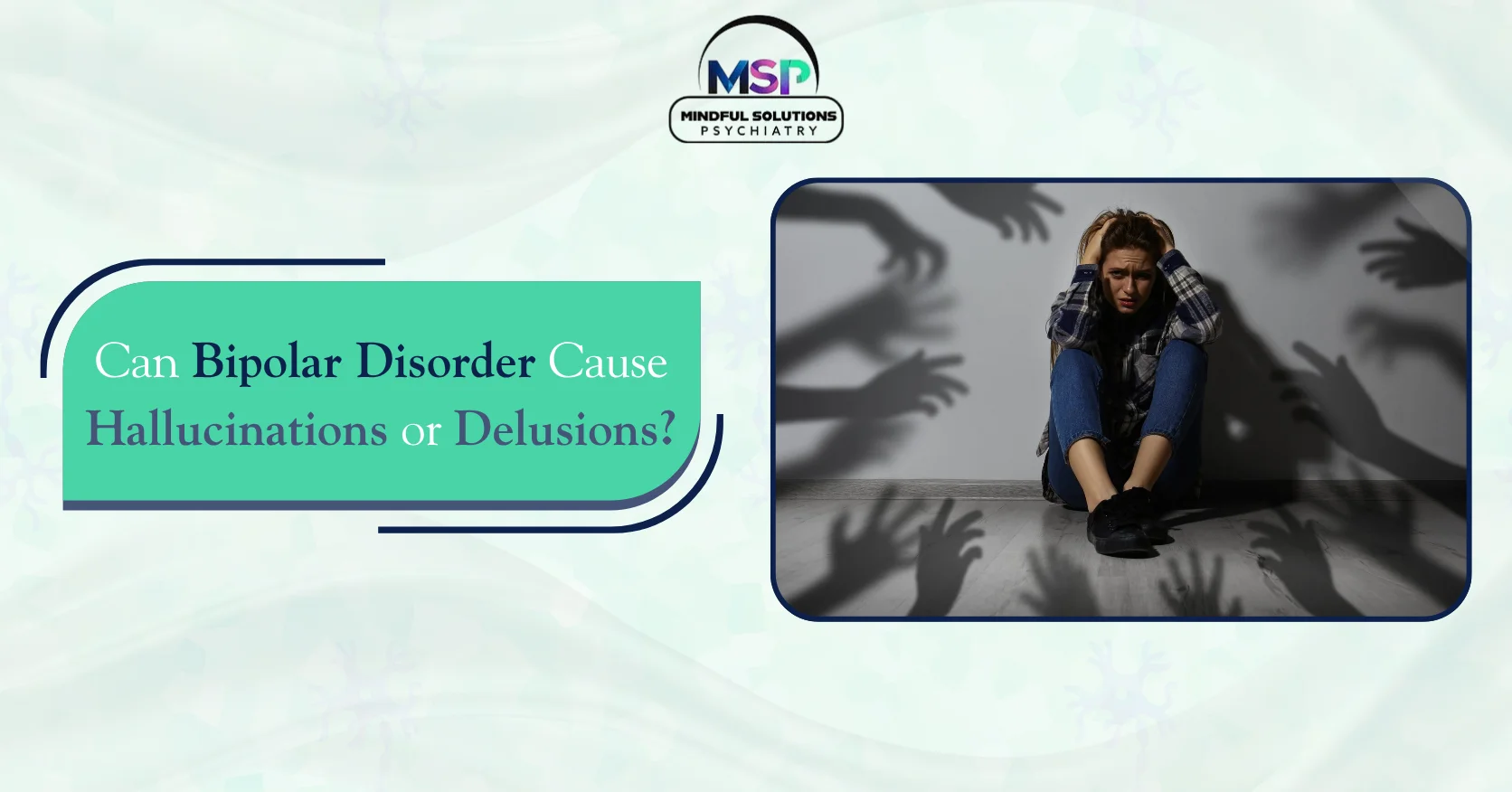
Bipolar disorder may also alter a person’s perception or view of the world at times. Some people may experience illusions in their eyes, ears, or ways of thinking. These events are known as hallucinations and delusions.
These symptoms can be terrifying, but help is available.
At Mindful Solutions Psychiatry, we provide compassionate assistance and personalized treatment strategies for individuals with bipolar disorder.
So, can bipolar disorder cause hallucinations or delusions? Let’s learn more.
What Is Bipolar Disorder?
Bipolar disorder is a mental health condition marked by extreme mood and energy shifts.
Symptoms include:
- Intense happiness or excitement
- High energy
- Deep sadness or hopelessness
- Fatigue affecting daily activities
Main mood episodes are:
- Mania
- Hypomania
- Depression
Symptoms vary in intensity among individuals.
Can Bipolar Disorder Cause Hallucinations or Delusions?
Yes. Bipolar disorder can sometimes cause hallucinations and delusions, especially during severe mood episodes.
Hallucinations and delusions are called psychotic symptoms. It can cause a person to lose the ability to perceive reality and unreality. The symptoms are treatable, though and many people benefit from good psychiatric management.
Hallucinations in Bipolar Disorder
A hallucination is when a person senses something that is not really there. It may seem real to the person experiencing it.
Examples of hallucinations include:
- Hearing a voice when no one is talking
- Seeing things that other people cannot see
- Feeling something touching their skin when nothing is there
- Smelling a strange odor with no clear source
- Tasting something unusual without eating anything
Hallucinations can happen during intense manic or depressive episodes. However, not everyone with bipolar disorder will have them.
Delusions in Bipolar Disorder
Delusions are beliefs that are not consistent with reality and prevail despite actual evidence that they are false. If someone has a delusion, they truly believe that their thought is true.
Some examples of delusions are:
- Thinking they have special powers
- Believing they have a very important job or mission
- Feeling that someone is watching or following them
- Believing a famous person is sending them secret messages
- Thinking people want to hurt them without proof
Delusions may be connected to a person’s mood. During mania, a person may believe they have special abilities. During depression, they may believe they are guilty or worthless when they are not.
Not everyone with bipolar disorder experiences hallucinations or delusions. When they do happen, treatment can help reduce these symptoms.
When Do Hallucinations and Delusions Happen?
These symptoms usually appear during severe mood episodes.
During Mania
A manic episode involves unusually high energy and intense emotions.
Symptoms may include:
- Feeling extremely confident
- Talking very quickly
- Sleeping very little
- Racing thoughts
- Risky behaviors
- Feeling unusually powerful
In severe mania, hallucinations or delusions can occur, which may lead the person to think that they have a special ability or power.
During Depression
Severe depression can also lead to psychotic symptoms.
Some individuals might get:
- Deep sadness
- Hopelessness
- Low energy
- Loss of interest in daily life
- Difficulty concentrating
Guilt or unworthiness are part of the hallucinations or delusions that may occur during depression.
For instance, a person may think that they have done much harm to other people when he actually has not.
What Causes Hallucinations and Delusions in Bipolar Disorder?
Many factors are thought to be responsible for that. Possible causes include:
- Changes in brain chemicals
- Family history
- Severe mood changes
- High stress
- Lack of sleep
- Certain health problems
- Substance use
Usually, several things work together to cause these symptoms.
How Are Hallucinations and Delusions Diagnosed?
Comprehensive psychiatric evaluation is the initial step in diagnosis. We see patients as a whole at Mindful Solutions Psychiatry; we don’t just see one symptom.
An evaluation may include:
- Health history
- Mental health history
- Current symptoms
- Sleep habits
- Mood changes
- Family history
- Medications
- Daily life factors
This helps create the right treatment plan.
Treatment for Bipolar Disorder with Hallucinations or Delusions
Effective treatment aims to reduce mood episodes, enhance daily functioning and ensure long-term stability.
Medication Management
Medications are crucial and may include:
- Mood stabilizers
- Antipsychotics
- Other psychiatric drugs as needed
Plans are monitored and adjusted for effectiveness and minimal side effects.
Supportive Therapy
Therapy offers tools to:
- Identify warning signs
- Build coping skills
- Improve emotional control
- Reduce stress
- Strengthen relationships
- Establish healthy routines
It provides a judgment-free space for discussing challenges.
Personalized Care
Bipolar disorder varies by individual, making personalized care essential.
Mindful Solutions Psychiatry takes the time to develop a personalized treatment plan that’s specific to the patient’s symptoms, goals and strengths. We treat your child’s medication in a highly knowledgeable way while simultaneously providing mood-stabilizing and long-term recovery therapy.
When Should You Seek Professional Help?
Seek help if you:
- Hear or see things others do not
- Believe things that are not based on reality
- Have extreme mood changes
- Act in unsafe ways
- Feel deeply depressed
- Have thoughts of self-harm or suicide
- Struggle with daily activities
Take the First Step Toward Stability
Hallucinations and delusions are scary, but they don’t determine your future. Treatment and support can lead to recovery.
We can assist persons with bipolar disorder at Mindful Solutions Psychiatry. Our goal is to provide stability, confidence and hope. We do this through caring and personalized psychiatric care.
Contact us for a confidential consultation.
FAQs
Can delusions happen without hallucinations?
Yes, some people have delusions without hallucinations.
Do all people with bipolar disorder experience psychosis?
No, many do not have hallucinations or delusions.