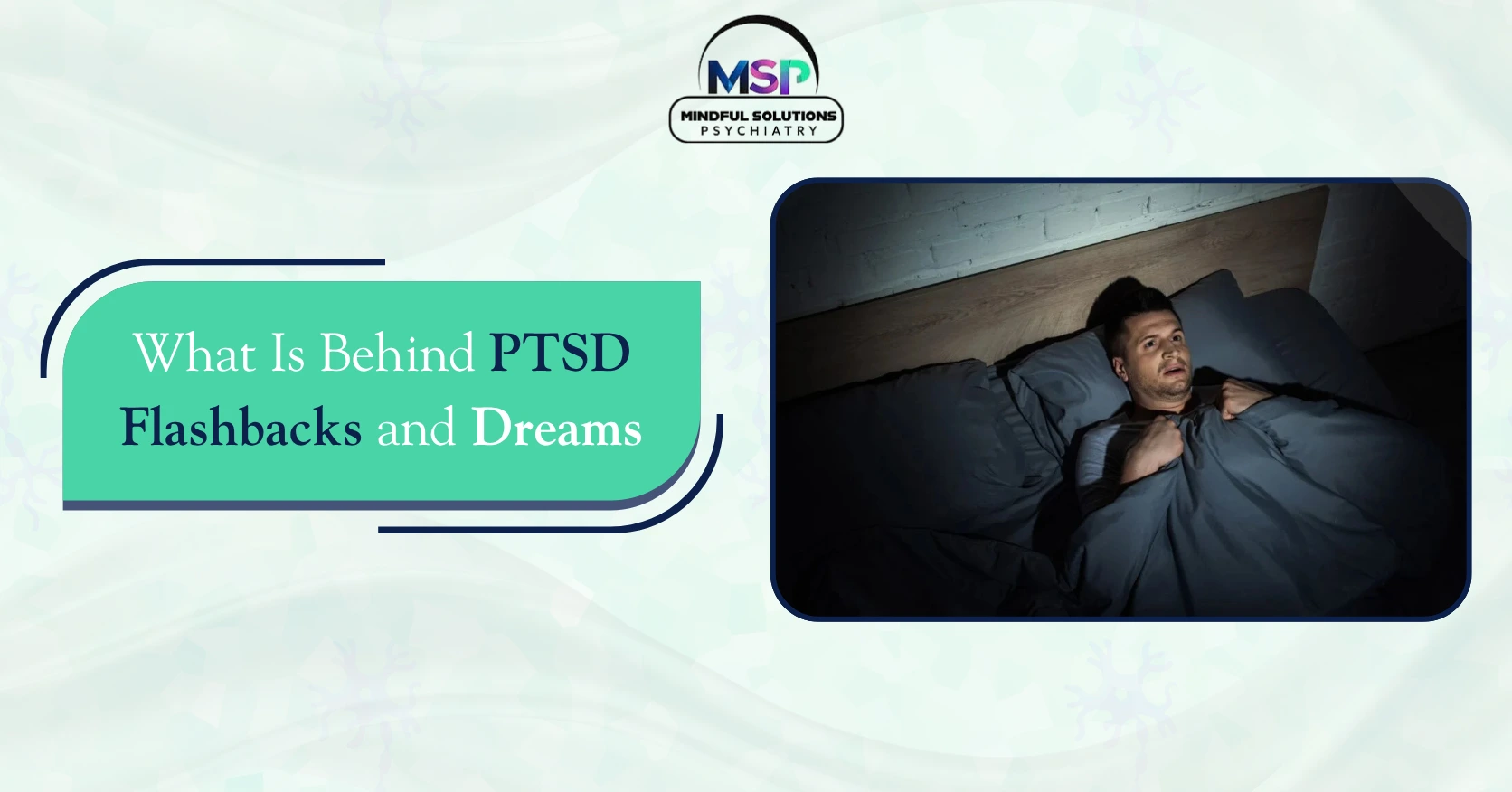
PTSD can cause scary flashbacks and dreams. An individual might feel that the unpleasant experience is repeating. This can make sleep and daily life hard. At Mindful Solutions Psychiatry, we recognize these symptoms are real and need care and support.
PTSD is post-traumatic stress disorder. It may occur following a very tough or frightening incident. It can keep the mind and body alert, even after the danger is gone. Flashbacks and dreams can happen for this reason.
What Is a Flashback?
A flashback is when a memory feels very real. It is not just thinking about the past. It can feel like the person is back in that moment again.
A flashback may include:
- Seeing pictures in the mind
- Hearing sounds from the event
- Feeling fear in the body
- Sweating or shaking
- A fast heartbeat
- Trouble knowing what is real right now
Flashbacks can come from a smell, a sound, a place, or a feeling that reminds the brain of the trauma.
Why Do Flashbacks Happen?
The brain attempts to guard us against harm. The brain can remain on high alert following a traumatic experience. It may act like the danger is still near.
The following are some of the common reasons why flashbacks occur:
- The event was very upsetting
- The brain did not get a chance to heal
- Something around the person brought back a strong memory
- Stress caused the body to become unsafe once again
- The individual is exhausted, concerned or overwhelmed
Trauma can be powerfully stored in the brain. Then, later, a little trigger can resurrect a big feeling.
What Are PTSD Dreams?
PTSD dreams are often called nightmares. They can be about the event or about something that feels close to it. Some people wake up scared, sweaty, or with a fast heartbeat.
These dreams may:
- Repeat the same bad scene
- Show fear, danger, or loss
- Make the person avoid sleep
- Causes tiredness the next day
- Make it hard to relax
Dreams like these can be a sign that the brain is still trying to process pain.
Why Do These Dreams Happen?
During sleep, the brain works through memories and feelings. If trauma has not been healed, the brain may bring it up in sleep. This can lead to bad dreams or nightmares.
PTSD dreams may happen more often when:
- The person is under stress
- Sleep is broken or poor
- The trauma is still fresh
- The person feels unsafe
- The mind has not had enough support
The good news is that help is available. These dreams do not mean a person is weak. They mean the brain needs care.
Signs That PTSD May Be Affecting Sleep and Memory
PTSD can show up in many ways. Flashbacks and dreams are only part of it. A person may also have:
- Trouble sleeping
- Feeling jumpy
- Being on edge
- Avoiding things that remind them of trauma
- Bad mood or sadness
- Trouble focusing
- Feeling numb or far away from others
These signs can happen in adults, teens and children aged 10 and up.
What Can Help
Healing takes time, but many things can help. At Mindful Solutions Psychiatry, we work with each person to build a plan that fits their needs. We believe care should feel respectful, safe and personal.
Helpful steps may include:
- Talking with a mental health provider
- Learning ways to calm the body
- Building better sleep habits
- Using medicine when needed
- Understanding triggers
- Creating a safe daily routine
Some people need therapy. Some need medication management. Some need both. The right plan depends on the person.
Easy Ways to Cope During a Flashback
When a flashback starts, it can help to return to the present moment. Try simple steps like these:
- Name five things you see around you
- Hold something cold or soft
- Take slow breaths
- Say the date and where you are
- Remind yourself, “I am safe right now.”
- Move to a quiet place if possible
These small steps can help the brain feel calmer.
Better Sleep Tips for PTSD Dreams
Sleep can be hard with PTSD. Good habits may help the body rest better.
Try these ideas:
- Go to bed at the same time every night
- Keep the room dark and calm
- Avoid scary shows before bed
- Do a quiet task before sleep
- Use deep breathing
- Keep a light nearby if that feels safe
If nightmares keep coming back, it is a good idea to talk with a mental health provider.
How Mindful Solutions Psychiatry Can Help
At Mindful Solutions Psychiatry, we believe mental health care should be a partnership. We listen with care. We treat each person with respect. We make a treatment plan together.
We provide psychiatric care for patients aged 10 and up. Our team helps with:
- PTSD
- Depression
- Anxiety
- Bipolar disorder
- OCD
- ADHD
- Medication management
- Mental wellness care
For PTSD flashbacks and dreams, we work to understand what is happening and what support may help most. Some people need help with fear and sleep. Some need support for stress, worry, or mood problems too. We consider the entire individual, rather than focusing on just a single symptom.
When to Reach Out for Help
It is time to get help when PTSD symptoms start to affect daily life. Reach out if:
- Sleep keeps getting worse
- Flashbacks happen often
- Nightmares feel intense
- The person avoids normal life
- Anxiety or sadness is growing
- It is hard to feel safe
Getting help early can make a big difference.
Final Thoughts
PTSD flashbacks and dreams happen because the brain is trying to protect a person after trauma. But the brain can stay stuck in alarm mode. That is why memories may feel alive in the mind and in sleep.
With the right care, things can get better. At Mindful Solutions Psychiatry, we offer kind, personal support for people aged 10 and up. We are here to help with PTSD and other mental health needs in a way that feels caring and clear.
FAQs
Q. Why do PTSD dreams happen?
PTSD dreams can happen when the brain is still upset about a past scary event. The mind may bring it up during sleep.
Q. Can PTSD flashbacks happen without warning?
Yes. A smell, sound, place, or feeling can bring on a flashback very fast.